How Does Ventilation Play a Role in Radon Mitigation?

Ventilation and radon mitigation work together to protect your home from one of the most dangerous gases you cannot see, smell, or taste. Radon is a naturally occurring radioactive gas that rises from the soil beneath your home and builds up indoors over time. It is the second leading cause of lung cancer in the United States, responsible for more than 21,000 deaths every year. The scary part is that most families have no idea it is even there. Understanding how ventilation reduces radon levels is one of the most important things a homeowner can do, and in this article we are going to walk you through exactly how it works, what systems are available, and what best practices will keep your family breathing safe air for years to come.
Radon does not just affect older homes or homes with cracked foundations. It can build up in any home, new or old, with or without a basement. The gas seeps in through the soil, through gaps around pipes, through concrete floors, and even through the tiniest cracks you cannot see. Once it is inside, it has nowhere to go if your home is tightly sealed. That is why ventilation is not just helpful for radon mitigation. It is essential.
In Missouri and Arkansas, where The Radon Company has been serving homeowners since 2010, radon is a very real and very common problem. Around 31 percent of Missouri homes test at levels the EPA considers dangerous. Northern Arkansas counties fall into EPA Zone 2, meaning elevated radon risk is built right into the geography. If you live in this region and you have not tested your home, there is a strong chance you are already dealing with a radon problem without knowing it.
This article is going to cover the basics of how ventilation reduces radon, the difference between passive and active radon ventilation systems, what homeowners with crawl spaces need to know, and the best practices that make any radon mitigation system perform at its best. By the time you finish reading, you will know exactly what to ask and exactly what to do next.
How Does Radon Actually Get Into Your Home?
Before you can understand how ventilation fixes the problem, it helps to understand how radon creates it in the first place.
Radon forms underground when uranium in soil and rock breaks down naturally over time. As it forms, it rises upward through the ground and looks for a way out. Your home, sitting on top of that soil, becomes the path of least resistance. The air pressure inside most homes is slightly lower than the pressure in the soil beneath them. That pressure difference acts like a vacuum, pulling radon gas up through any opening it can find.
Radon enters through cracks in basement floors and walls, through gaps where pipes enter the foundation, through sump pits, through hollow block foundation walls, and through porous concrete. Even a home that looks solid and well-built can have radon seeping in constantly. Once inside, it accumulates in the lowest levels of the home first, which is why basements and ground-floor living areas tend to have the highest radon concentrations.
The good news is that the same pressure dynamics that pull radon in can be reversed. That is exactly what a radon ventilation system is designed to do.
What Is a Radon Ventilation System and How Does It Work?
A radon ventilation system works by changing the pressure relationship between your home and the soil beneath it. Instead of letting radon drift upward into your living space, the system captures it before it ever gets there and pushes it safely outside.
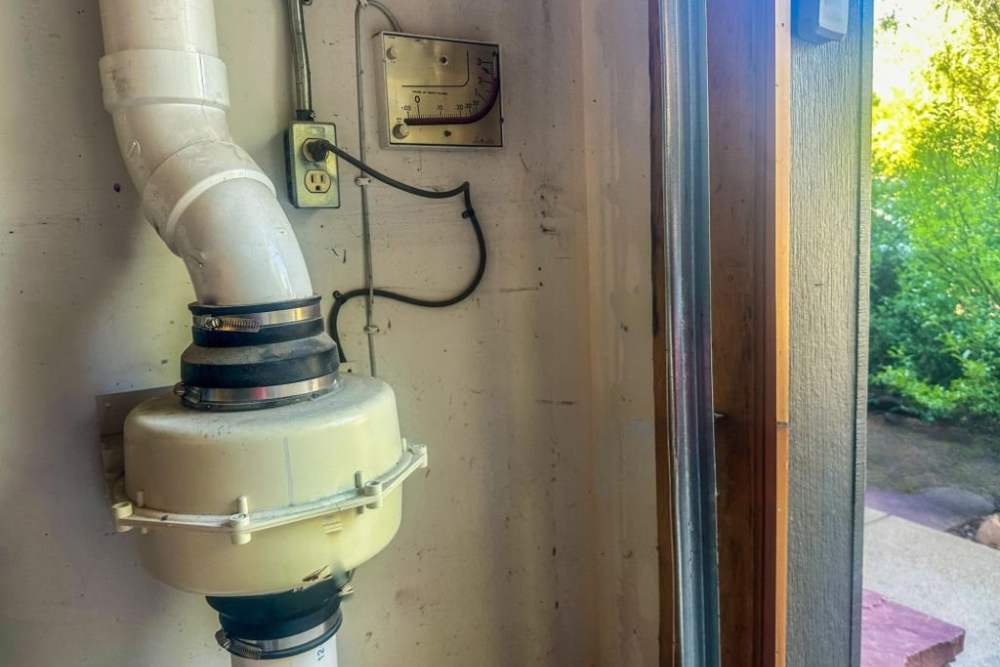
The most widely used and most effective method is called sub-slab depressurization. In this approach, a certified radon professional inserts a pipe through or beneath the concrete slab of your foundation. A radon fan is then attached to that pipe. The fan runs continuously, pulling radon gas from beneath the slab and routing it through the pipe to a discharge point above the roofline of your home, well away from windows and vents where it could re-enter.
The result is that the air pressure beneath your slab becomes lower than the pressure in the surrounding soil. Radon that would have risen into your home is instead drawn toward the suction point and sent outside. This system does not just reduce radon. When installed correctly, it can eliminate the radon problem entirely, dropping levels well below the EPA action threshold of 4 pCi/L.
Sub-slab depressurization is effective in homes with poured concrete slabs, finished basements, and many crawl space configurations. For homes with different foundation types, there are variations of this approach, and a professional assessment will determine which method fits your specific home.
What Is the Difference Between Passive and Active Radon Ventilation?
When you hear about radon ventilation systems, you will likely come across two terms: passive and active. These describe two different approaches, and knowing the difference matters when you are deciding what your home needs.
A passive radon ventilation system uses the natural movement of air and heat to carry radon upward through a pipe and out of the home. No fan is involved. These systems are commonly installed in new construction as a built-in precaution. The piping runs from beneath the slab up through the home and exits above the roof, and rising warm air inside the pipe creates a natural draft that pulls radon upward.
Passive systems are a smart move in new construction because they are inexpensive to install during the building process and they prepare the home for an easy upgrade if needed. However, they are not always reliable enough on their own. Seasonal pressure changes, cold weather, and the specific soil conditions beneath your home can all reduce the effectiveness of a passive system.
An active radon ventilation system adds a radon fan to the setup. That fan creates a consistent, mechanical suction that does not depend on weather, temperature, or natural air movement. It runs around the clock and delivers dependable performance regardless of the season. For homes where radon has been detected above safe levels, an active system is the standard of care and the recommended solution.
If your home already has the piping from a passive system, upgrading to active ventilation is usually a straightforward process. A radon professional can add a fan, test the results, and confirm your levels are where they need to be.
Why Does Crawl Space Radon Ventilation Require Its Own Strategy?
Homes built over crawl spaces face a different set of challenges when it comes to radon air circulation. A crawl space is a low, unfinished area beneath the home that often sits in direct contact with bare soil. Without proper attention, it becomes a collection zone for radon gas before it rises into the living spaces above.
There are two main approaches to crawl space radon ventilation, and they work in very different ways.
The first is sub-membrane depressurization. A heavy-duty vapor barrier is laid across the entire crawl space floor and sealed at the walls. A pipe and fan system then creates suction beneath that barrier, pulling radon from the soil and routing it outside. This method is highly effective and has the added benefit of controlling moisture, which reduces the risk of mold and structural damage.
The second approach is enhanced natural ventilation, which involves increasing airflow through the crawl space using vents or mechanical fans to dilute radon concentrations before they rise. This method is less reliable and less consistent than sub-membrane depressurization, especially in homes with significant radon levels.
If your home has a crawl space, it is critical that your radon mitigation plan specifically addresses it. A system designed for a basement slab alone will not solve a crawl space radon problem. Make sure your radon professional evaluates the full picture of your home’s foundation before recommending a solution.
What Are the Best Practices for Radon Mitigation Ventilation?
Getting the right system installed is just the beginning. Following radon mitigation best practices is what makes the difference between a system that truly protects your home and one that falls short over time.
The first best practice is proper system design from the start. Fan sizing, pipe placement, and suction point location all need to match the specific conditions beneath your home. Soil type, slab thickness, foundation layout, and the size of your home all factor into the design. A radon professional who takes the time to assess your home thoroughly before recommending a system is worth every bit of the investment.
Sealing matters too. Cracks in the foundation floor and walls, gaps around pipes, and openings in sump pits should all be sealed as part of a comprehensive radon mitigation strategy. Sealing alone will not solve a radon problem, but it makes the ventilation system more efficient and helps achieve lower radon levels faster.
Post-installation testing is not optional. After any radon ventilation system is installed, a follow-up radon test should be conducted to confirm that levels have dropped to a safe range. The EPA recommends a level below 4 pCi/L, and many experts encourage homeowners to aim for below 2 pCi/L when possible. Testing should take place in the lowest livable area of the home, and results should be reviewed with your radon professional before the job is considered complete.
Ongoing monitoring is another practice that too many homeowners skip. Testing your home every two years, even after a system is installed, is the standard recommendation. Radon levels can change over time due to shifts in soil conditions, changes to the home, seasonal variation, and fan performance. Staying on top of testing means you catch any changes before they become a problem.
How Do You Know If Your Radon Ventilation System Is Still Working?
Many radon mitigation systems include a diagnostic tool called a manometer. It is a small U-shaped gauge mounted on the pipe that shows whether the system is maintaining the suction it needs to work. The fluid in the gauge should sit at unequal levels when the system is performing correctly. If the levels look equal, that is a warning sign that the fan may have stopped working or the system has lost suction.
Beyond checking the manometer, there are a few other things to watch for. Listen to the fan. A working radon fan runs quietly and consistently. If you notice unusual sounds or the fan has gone silent, have a professional check it right away. Look at the system visually every few months to make sure pipes are intact, connections are secure, and the outdoor discharge point is clear and unobstructed.
Do not rely only on the manometer as confirmation that your radon levels are safe. The gauge tells you whether the fan is running, not whether radon levels in your home are within a safe range. Regular radon testing is still the only way to know for sure.
Can Opening Windows and Running Fans Replace a Radon Ventilation System?
This is a question that comes up often, and the answer is no. General ventilation, including opening windows and running HVAC systems, can temporarily dilute radon inside your home, but it cannot reliably reduce levels to a safe range or maintain them there.
The problem is consistency. Outdoor air pressure changes with the weather. Seasons change how homes are sealed. In the winter, when windows stay closed and homes are tight, radon levels tend to rise significantly. In the summer, open windows may help some, but they do not address the source of the problem, which is radon entering from beneath the foundation.
A dedicated radon ventilation system is the only proven, consistent solution. It works regardless of the season, regardless of whether you remember to open a window, and regardless of weather conditions. It targets radon at its source and removes it before it ever enters your living space.
For homeowners in Missouri and Arkansas, where the regional geology contributes to higher radon potential, relying on general ventilation as a radon mitigation strategy is simply not enough. The risk is too real and the solution too available to leave it to chance.
Is It Time to Protect Your Home with a Radon Ventilation System?
Radon is not a problem that announces itself. It builds quietly, invisibly, over months and years, and the health consequences can take decades to appear. But the solution is not complicated, and it is not expensive. A properly installed radon ventilation system, maintained and tested regularly, is one of the most effective things you can do to protect your family’s long-term health.
At The Radon Company, we have been helping homeowners, businesses, and schools across Missouri and Arkansas breathe easier since 2010. Our certified professionals assess your home, design the right ventilation system for your specific situation, install it efficiently, and confirm it is working with post-installation testing. We do not guess. We measure, and we deliver results.
If you have not tested your home yet, now is the time. If you already know your radon levels are elevated, do not wait another day. Contact The Radon Company today to get a quote, schedule your radon test, or ask any questions about radon ventilation and mitigation. Your family’s health is worth it, and protecting it starts with one simple call.


